Needle-Punched Nonwovens | Manufacturing, Specifications, and Industrial Applications
Needle-punched nonwovens, also known as needle-punched felts, represent one of the most mechanically robust and versatile types of nonwoven materials. Unlike thermally bonded spunbond or chemically bonded fabrics, needle-punched nonwovens are formed entirely through the mechanical entanglement of fibers. Thousands of barbed needles repeatedly penetrate a web of staple fibers, interlocking them to create a dense, dimensionally stable sheet characterized by excellent tensile strength, porosity, and abrasion resistance.
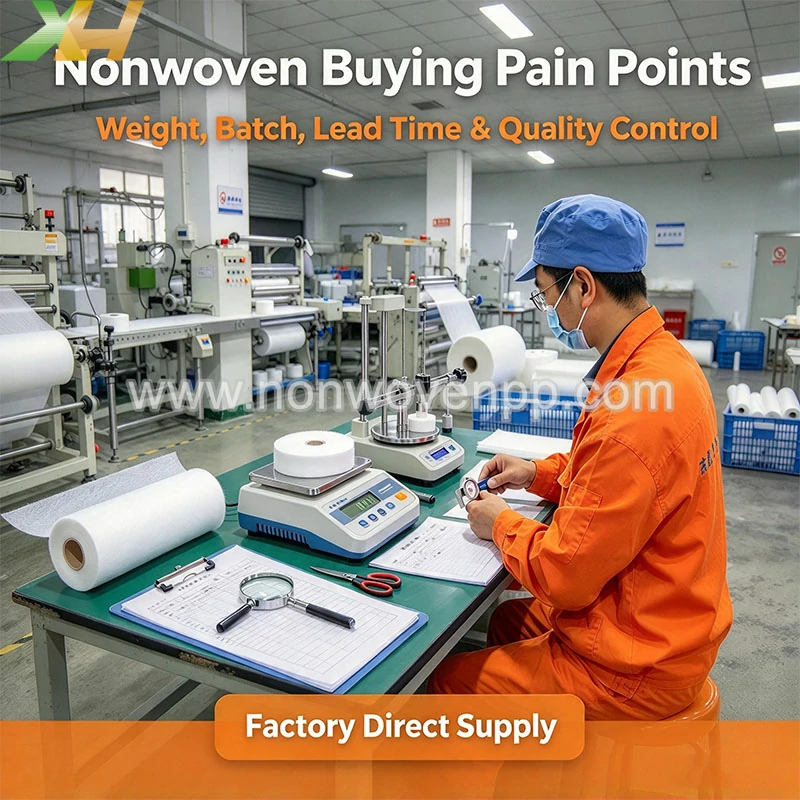
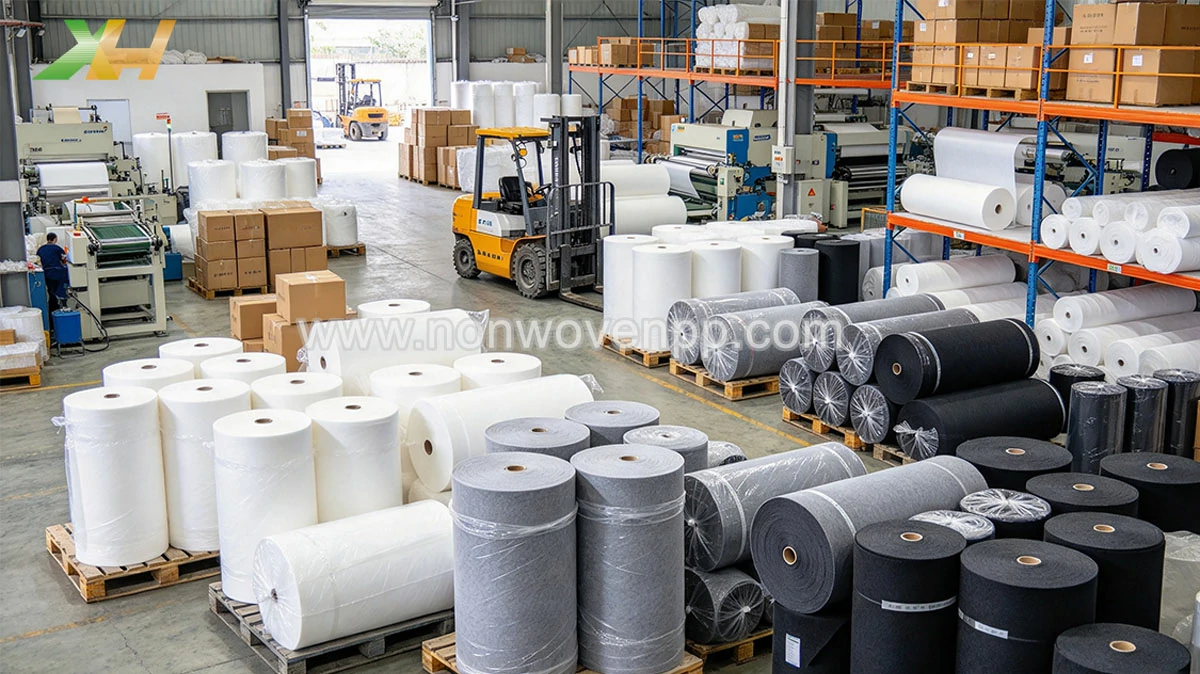
As a professional manufacturer with a comprehensive production line, Xinhua Textile offers high-quality needle-punched felts with basis weights ranging from 45 gsm to 1000 gsm. We provide full customization, including fiber composition, density, surface finishes, and functional treatments tailored to specific client requirements. Our products serve a wide range of global sectors—including geotechnical engineering, industrial filtration, automotive, furniture, and footwear. We maintain strict control over every stage of production, from initial fiber blending to final finishing, ensuring consistent quality and reliable performance even under demanding field conditions.
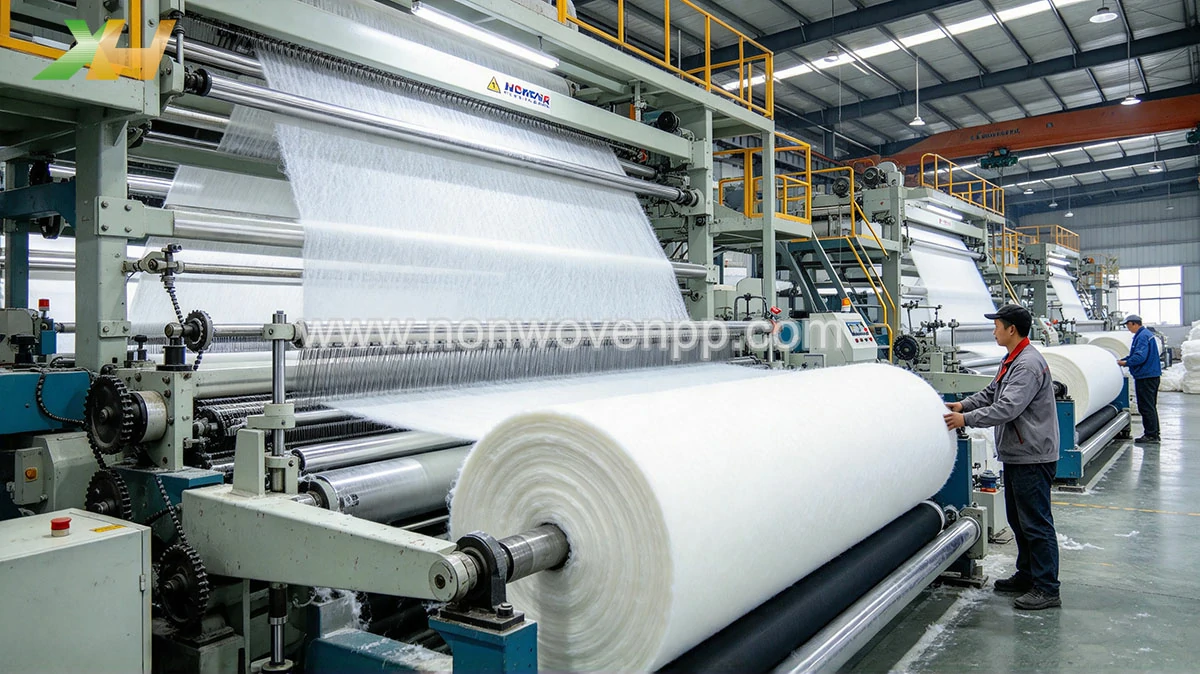
The Production Process of Needle-Punched Nonwovens
The needle-punching process relies exclusively on the mechanical interlocking of fibers—eschewing heat, adhesives, or chemical binders—making it an ideal solution for applications that require high chemical purity, resistance to elevated temperatures, or long-term durability.
Standard Production Workflow
1. Fiber Preparation and Blending — Selected staple fibers (such as polyester, polypropylene, viscose, wool, or specialty fibers) are opened, blended, and mixed according to the target formulation. This stage determines the final mechanical, chemical, and thermal properties of the fabric.
2. Carding — The blended fibers are fed into a carding machine, which aligns and separates them into a thin, uniform fiber web. The quality of the carding process directly influences the weight uniformity and the consistency of the fabric's final strength.
3. Cross-lapping — The carded fiber web is laid back and forth by a cross-lapper to achieve the target basis weight and enhance cross-machine direction (CD) strength. The number of layers determines the final thickness of the fabric and the balance between machine direction (MD) and cross-machine direction (CD) strength.
4. Pre-needling — The layered web passes through a pre-needling machine with a low needle density, which lightly consolidates the structure to prevent deformation during transfer to the main needle-punching line.
5. Main Needle-punching — The pre-needled fabric then passes through a series of 2–4 main needle-punching machines. Each machine is equipped with thousands of barbed felting needles that penetrate the fabric vertically, pulling fibers through its thickness and entangling them into a robust, cohesive structure. Needle density, penetration depth, and punching frequency are precisely adjusted to achieve the desired density and strength.
6. Finishing — Depending on the specific application, the finished fabric may undergo processes such as heat-setting, calendering, singeing, or treatments for water resistance, antistatic properties, or flame retardancy.
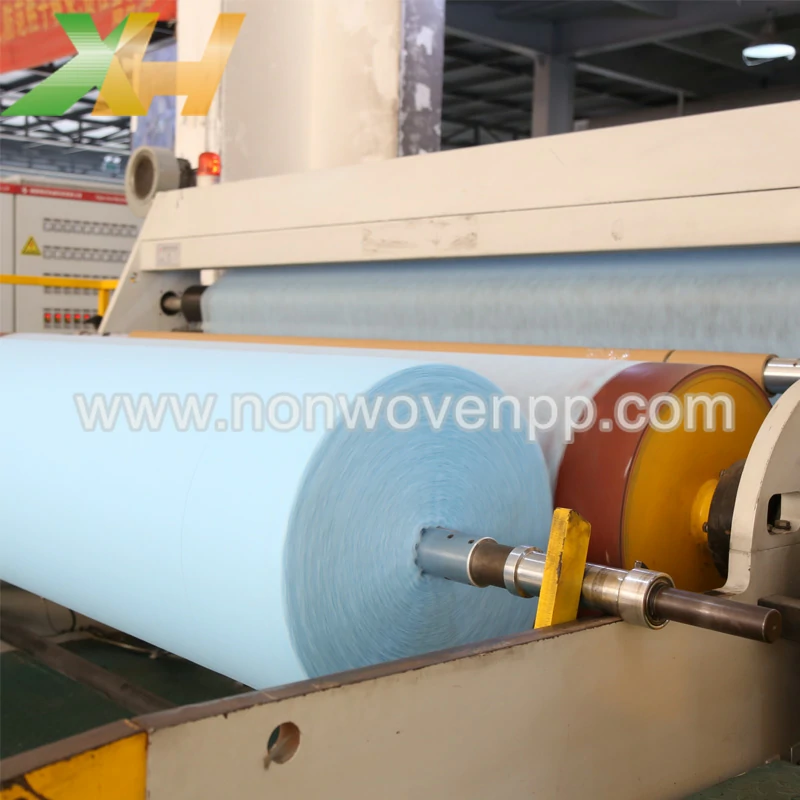
7. Inspection and Winding — A final quality inspection is performed, after which the fabric is wound into rolls of standard length and packaging specifications.
Key Characteristics and Performance Advantages
Needle-punched nonwovens possess unique properties that are difficult to achieve through other nonwoven manufacturing processes.
- Superior Tensile and Tear Strength — Mechanical fiber entanglement imparts high strength in both the machine and cross-machine directions, along with excellent tear resistance, abrasion resistance, and durability against repeated flexing.
- Controllable Porosity and Permeability — By adjusting needle density, fiber fineness, and fabric density, it is possible to control pore size as well as air or water permeability, making these materials suitable for applications such as filtration, drainage, and separation.
- Thickness and Resilience — These fabrics can be produced in a wide range of thicknesses—from 1 mm to over 20 mm—and offer excellent compression recovery and cushioning properties.
- Chemical and Thermal Stability — Can be formulated with high-temperature resistant fibers or chemically resistant polymers, making it suitable for demanding industrial environments.
- Free of Chemical Binders — Purely mechanical bonding ensures no binder migration, low VOC content, and superior compatibility with sensitive applications such as food filtration and medical liners.
- Highly Customizable — A wide range of fiber types, basis weights, densities, surface finishes, and functional treatments are available to meet diverse application requirements.
Key Industrial Applications and Recommended Specifications
Needle-punched nonwoven fabrics are widely used across various heavy-duty industrial and commercial sectors. Below are the most common use cases and guidelines for standard specifications.
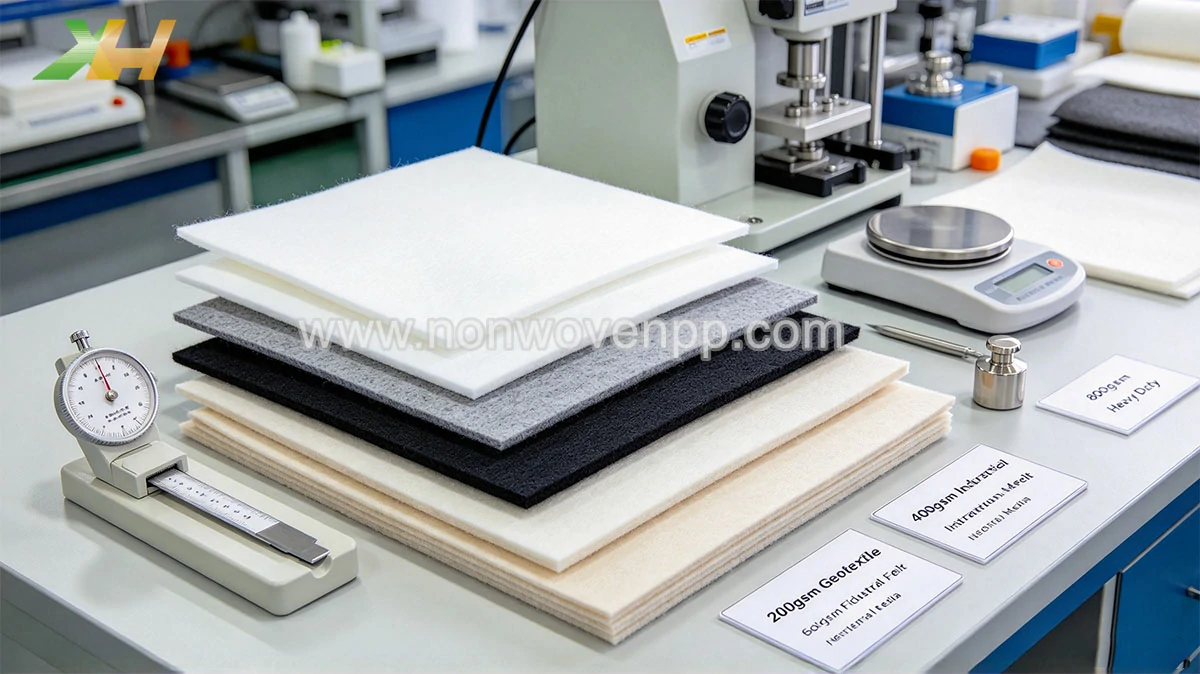
| Application | Recommended GSM | Common Fiber Materials | Key Requirements & Treatments |
|---|---|---|---|
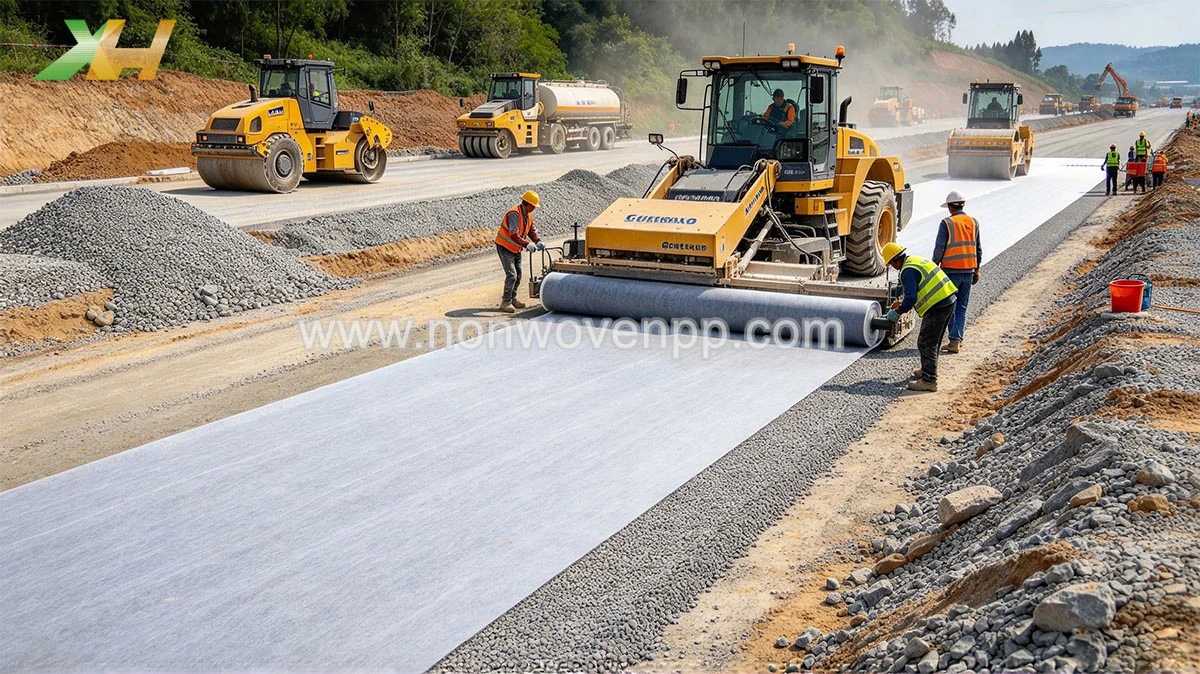
| Geotextile for road & construction | 200 – 600 gsm | Polyester (PET), Polypropylene (PP) | High tensile strength, UV stabilized, puncture resistant |
| Industrial liquid & air filtration | 150 – 800 gsm | Polyester, Polypropylene, Acrylic | Uniform pore size, chemical resistant, heat set |
| Automotive interior & insulation | 200 – 500 gsm | Polyester, Recycled PET | Sound absorption, thermal insulation, flame retardant |
| Furniture & carpet backing | 120 – 400 gsm | Polyester, Polypropylene | Dimensional stability, anti-slip, abrasion resistant |
| Footwear & synthetic leather base | 180 – 450 gsm | Polyester, Polyester / viscose blend | Smooth surface, uniform density, good formability |
| Industrial felt & polishing pads | 300 – 1200 gsm | Polyester, Wool, Nylon | Wear resistant, compression recovery, oil resistant |
| Civil engineering drainage | 250 – 700 gsm | Polypropylene, Polyester | High water permeability, soil retention, UV stabilized |
| Home textile & bedding wadding | 100 – 300 gsm | Polyester, Hollow conjugate fiber | Lofty, resilient, thermal insulation |
Quality Standards for Industrial-Grade Needle-Punched Nonwovens
Maintaining consistent performance in demanding industrial environments relies on rigorous process control at every stage of production.
At Xinhua Textile, we implement strict quality control across all key parameters:
- Raw Material Fiber Verification — Each batch of fiber is tested for denier (fineness), length, tensile strength, and melting point to ensure formulation consistency.
- Basis Weight Uniformity — Online weight monitoring is employed to ensure that the basis weight deviation across the entire width and length of the product roll is kept within ±5%.
- Needle-Punching Process Control — For each product specification, parameters such as needle density, penetration depth, and stroke frequency are documented and standardized.
- Tensile and Tear Testing — Samples are taken from every production batch to test for machine direction (MD) and cross direction (CD) strength, elongation, and tear resistance.
- Thickness and Density Consistency — Multi-point measurements are conducted to ensure uniformity in the product’s structure and performance.
- Functional Treatment Verification — For fabrics that have undergone special treatments, performance testing is performed to confirm the durability and effectiveness of these treatments.
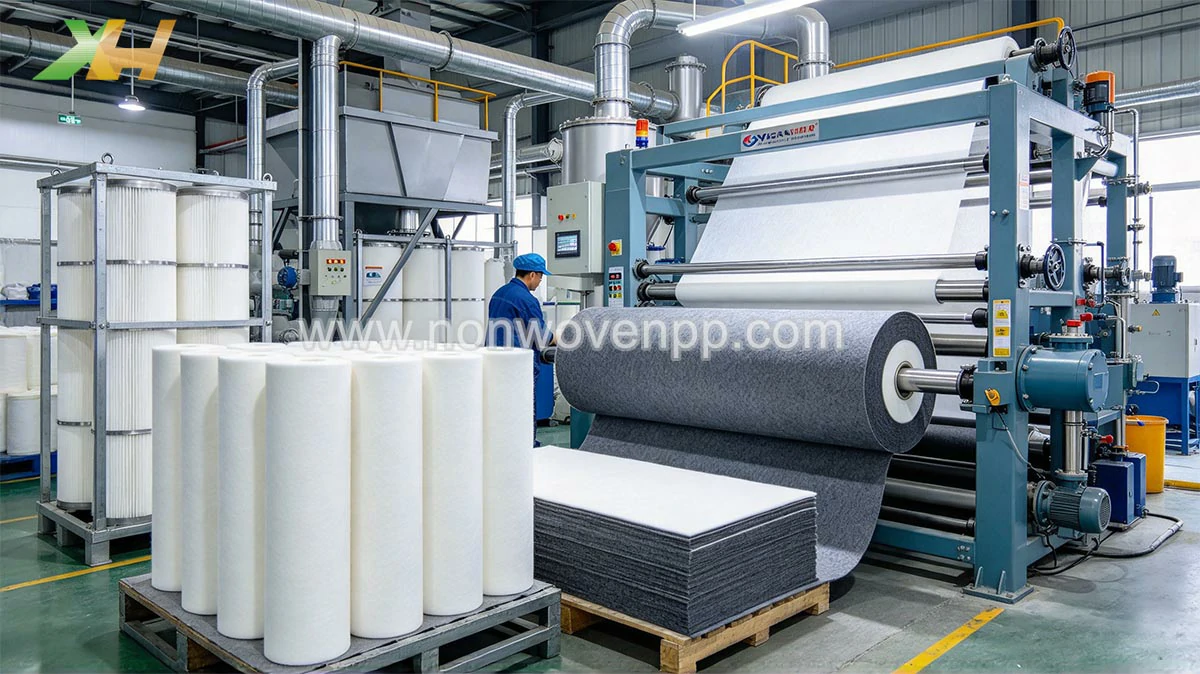
Why Source Needle-Punched Nonwovens Directly from Xinhua Textile?
Partnering directly with an experienced manufacturer of needle-punched felt offers significant advantages for industrial buyers and distributors.
Factory-Direct Pricing
By managing our own production, we eliminate intermediary markups—offering you transparent, highly competitive pricing while ensuring compliance with rigorous industrial quality standards.
Comprehensive Customization Capabilities
We offer flexible customization based on your specific application requirements, including fiber composition, basis weight, thickness, needle-punch density, surface treatments, and functional finishes. We also accommodate custom roll widths, lengths, and other specialized dimensions.
Stable, Large-Scale Production Capacity
Equipped with multiple complete needle-punched nonwoven production lines and fiber pre-processing systems, we are well-positioned to handle large-volume, ongoing orders—ensuring reliable lead times and consistent quality across every batch.
Technical Formulation Support
Our engineering team can recommend material formulations and process parameters tailored to your specific performance requirements, helping you achieve the optimal balance between cost and performance.
Extensive Global Export Experience
We provide comprehensive export documentation, customized packaging, and flexible trade terms, backed by deep experience in serving industrial clients worldwide.
Ordering and Sampling Process
Before placing a large-volume order, we recommend testing samples to verify the product’s basis weight, strength, surface characteristics, and suitability for your specific application.
Our standard ordering process:
1. Provide your application requirements, target specifications, order quantity, and delivery schedule.
2. Receive our technical recommendations and transparent, direct-from-factory pricing.
3. Confirm your sample order for physical evaluation and performance testing.
4. Finalize sample specifications and place your formal bulk order.
5. We manage production, conduct comprehensive quality inspections, and ensure on-time delivery.
We apply consistent quality standards to every order.
If you are looking for a reliable manufacturer of needle-punched nonwoven fabrics—suitable for applications in geotextiles, filtration, automotive, furniture, or various other industrial sectors—Xinhua Textile is here to assist you. Please share your specific requirements with us; our technical sales team will provide material recommendations, sampling options, and highly competitive factory-direct pricing.
We look forward to becoming your trusted, long-term partner in the field of industrial needle-punched nonwoven fabrics.
7 Major Procurement Pain Points for Nonwoven Fabric Sellers
PP Spunbond Nonwoven Fabric: Properties, Production Process, and Application Guide